Earthworm humus for plants: the organic fertilizer that nourishes the soil and activates its life
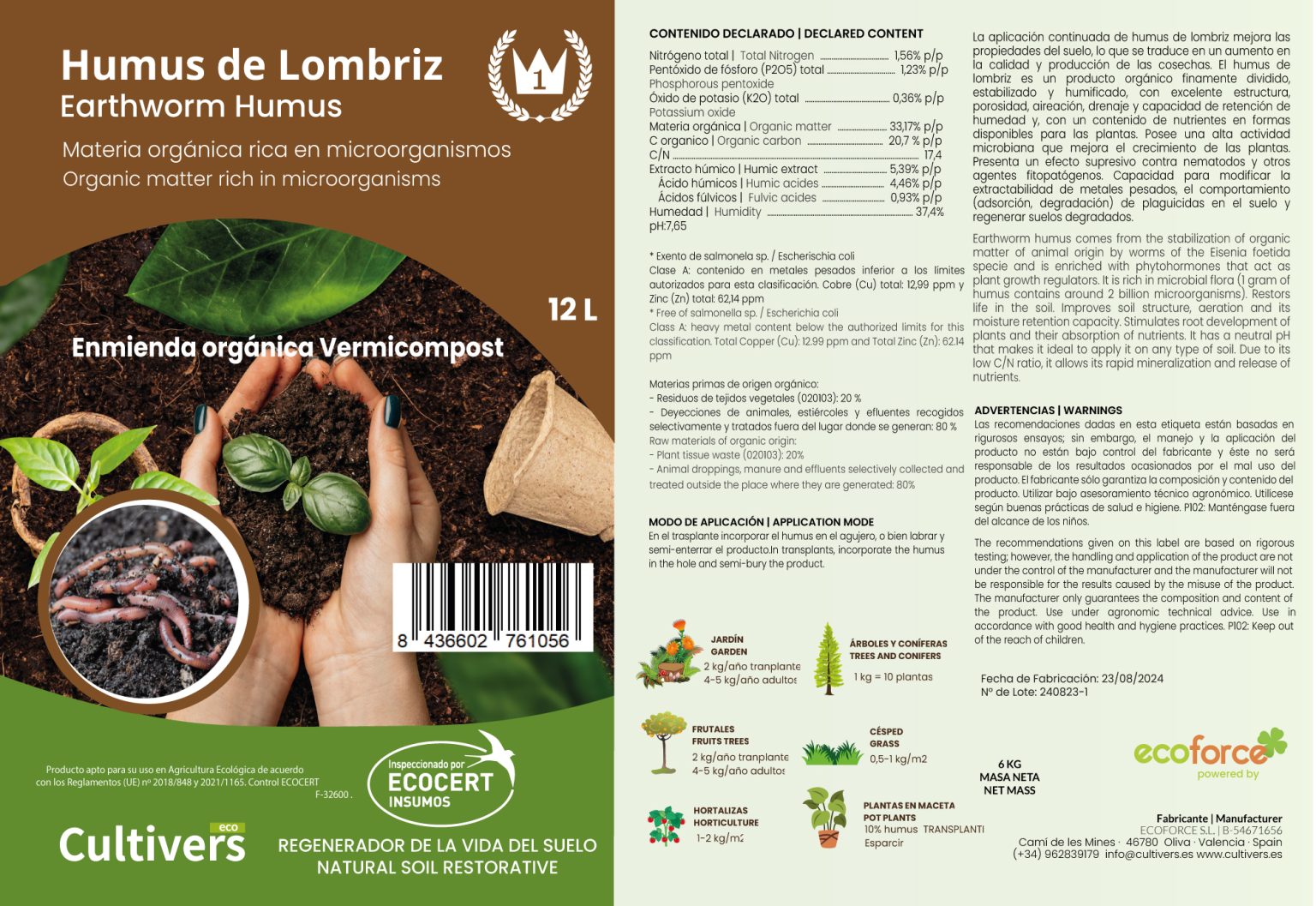
Ecological vermicompost enriched with seaweed. Composition: 33.17% organic matter, 1.56% nitrogen, humic extract 5.39% and neutral pH of 7.65. Ecocert certificate for organic farming. No safety period.
Most of the worm castings you find on the market do their job well: they provide organic matter, improve the soil, nourish the plants. The one we make at Cultivers starts from there and adds something that conventional vermicompost does not have: seaweed, a plant component that acts as a natural biostimulant and changes what the soil is capable of doing. Ecocert certified for organic farming, with no safety deadline.
Suitable for use in organic farming in accordance with Regulations (EU) 2018/848 and 2021/1165.
ECOCERT Control
What is worm humus and why is it different from other organic fertilizers?
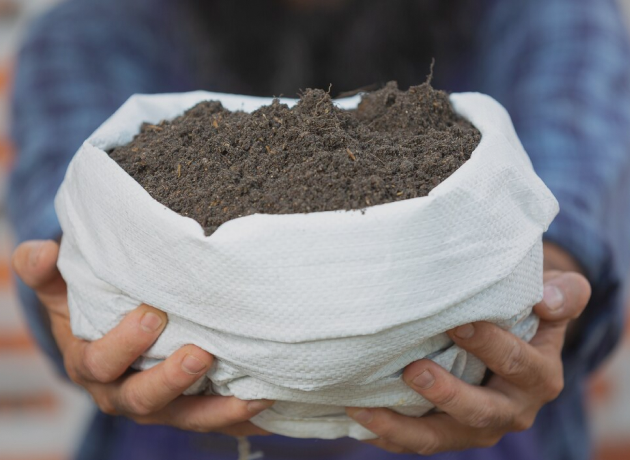
Worm humus, also called vermicompost, is obtained when earthworms transform organic matter into a stable material, rich in assimilable nutrients and loaded with beneficial microorganisms. The result is unlike conventional compost or mineral fertilizers: it acts on three levels at once.
On the physical level, it improves porosity, aeration and water retention, creating a more spongy, porous and balanced environment that favors root development. On the chemical level, it provides nitrogen, phosphorus, potassium and microelements in forms that can be directly used by the plant, and helps neutralize pesticide residues that may remain in the soil. Biologically, it activates natural enzymes that solubilize nutrients, stimulate beneficial microbial life and hinder the proliferation of pathogenic fungi and bacteria.
Unlike synthetic fertilizers, which act fast but deplete just as quickly, worm castings release nutrients in a progressive and sustained manner. No risk of burning the roots, no peaks of over fertilization, no empty soil in the middle of the season.
The incorporation of seaweed in the Cultivers formula adds something that conventional vermicompost cannot offer: a reinforced biological response to environmental stresses – drought, cold, transplanting – and an extra boost at every stage of growth, from germination to fruit production.
What sets this worm humus apart
- Formula enriched with seaweed. Most vermicompost contains nothing more than what the worms produce. Ours incorporates seaweed as a natural biostimulant: a component that reinforces soil response, improves plant resistance and enhances growth at every stage of the cycle.
- High content of organic matter and humic extract. With 33.17% organic matter and 5.39% humic extract – of which 4.46% are humic acids – this humus works at the same time on the chemical fertility and physical structure of the soil.
- Neutral pH: without complications for any crop. A pH of 7.65 means that you can use it directly in acidic, neutral or slightly alkaline soils, in pots or in soil, without prior adjustments and without risk of damaging anything.
- Rapid and sustained release of nutrients. Its low carbon/nitrogen ratio (C/N: 17.4) and its richness in active microorganisms favor an agile mineralization: nutrients become available early and remain accessible throughout the cycle.
- Improves the soil regardless of its starting point. In clayey and compacted soils it reduces density and improves aeration. In sandy soils it increases cohesion and water retention. In both cases the result is a more balanced structure and a more favorable environment for roots.
- It cleans the soil and multiplies the effectiveness of other fertilizers. Its absorption capacity helps neutralize pesticide residues and improves the utilization of any fertilizer you apply with or after it.
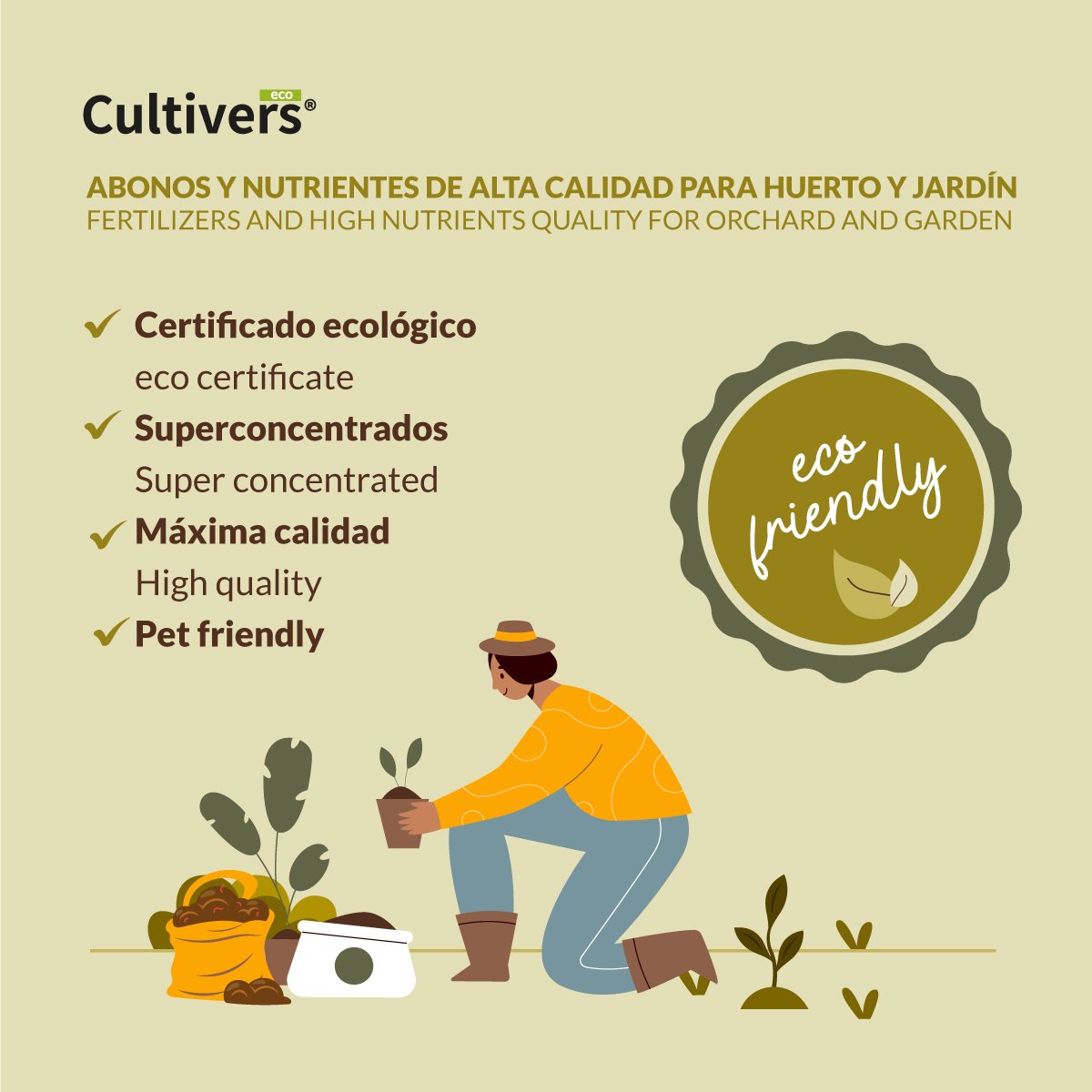
- Ecocert certificate for organic farming. No synthetic residues, no safety deadline and suitable for orchards, gardens and certified organic crops. When applied according to the indicated doses, there is no risk of over-subsidization.
For which crops and situations it is ideal
- Urban garden and vegetables. Tomatoes, peppers, lettuce, carrots: any vegetable responds well to worm castings, both at planting or transplanting and during the cycle. It is especially useful in gardens that have been producing for several seasons in a row and are beginning to notice that the soil is becoming less productive.
- Fruit trees and trees. In transplanting, it stimulates root development from the beginning. In adult trees, an annual application maintains soil structure and contributes to a more regular and balanced production.
- Ornamental garden. Roses, shrubs, hedges and flowering plants make good use of stable organic matter, especially in gardens where the soil has not received any organic amendment for years.
- Lawn. Applied as a surface amendment, it improves soil texture under the turf, promotes deeper rooting and helps maintain greenery without relying on frequent watering.
- Pots and houseplants. A proportion of approximately 10% humus in the transplanting substrate improves the water and nutrient retention of the pot, and reduces the frequency of fertilization and watering.
- Degraded or depleted soils. If the soil has been under intensive cultivation or chemical fertilizers for years, earthworm humus is the best starting point to recover its biological activity and natural fertility.
Directions for use and dosage
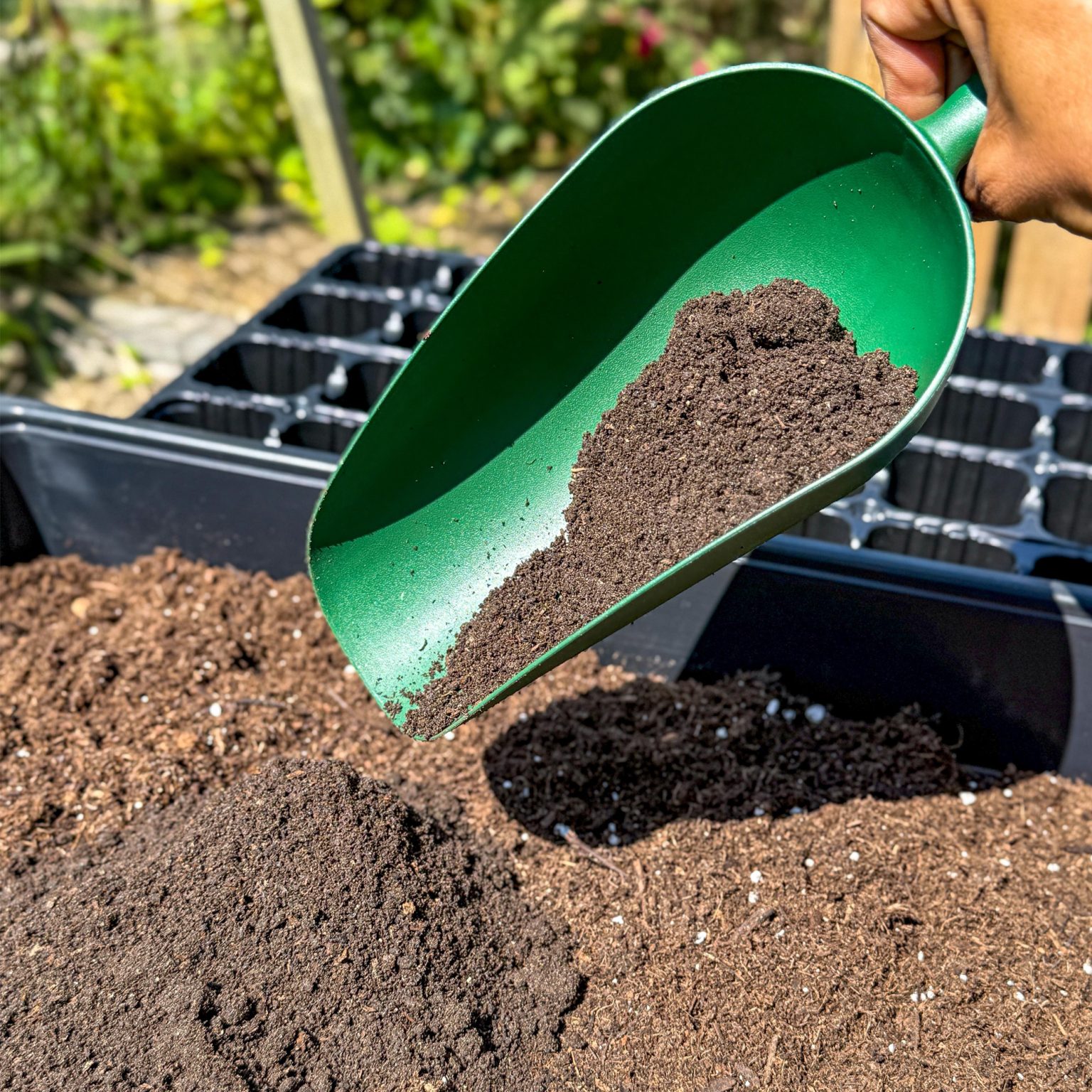
It is applied dry, mixed with soil or spread on surface. It does not need previous dilution.
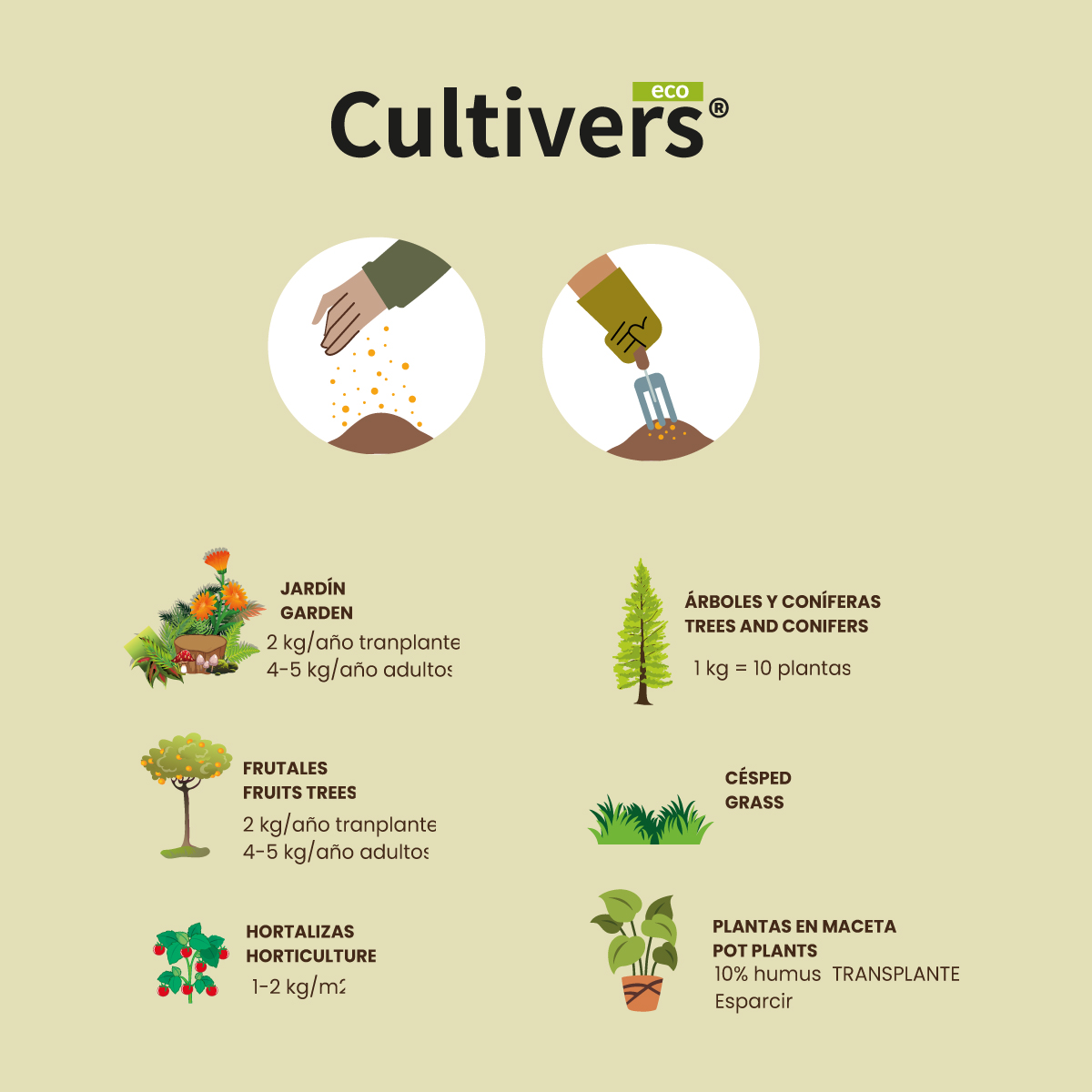
- Garden and green areas: 0.5-1 kg per m².
- Vegetables: 1-2 kg per m².
- Transplanting fruit trees: 2 kg per tree. Adult trees: 4-5 kg per year.
- Conifers and hedges: 1 kg for 10 plants.
- Lawn: 0.5-1 kg per m².
- Pots: mix 10% humus with the substrate at transplanting. For maintenance, spread a superficial layer and water to integrate it.
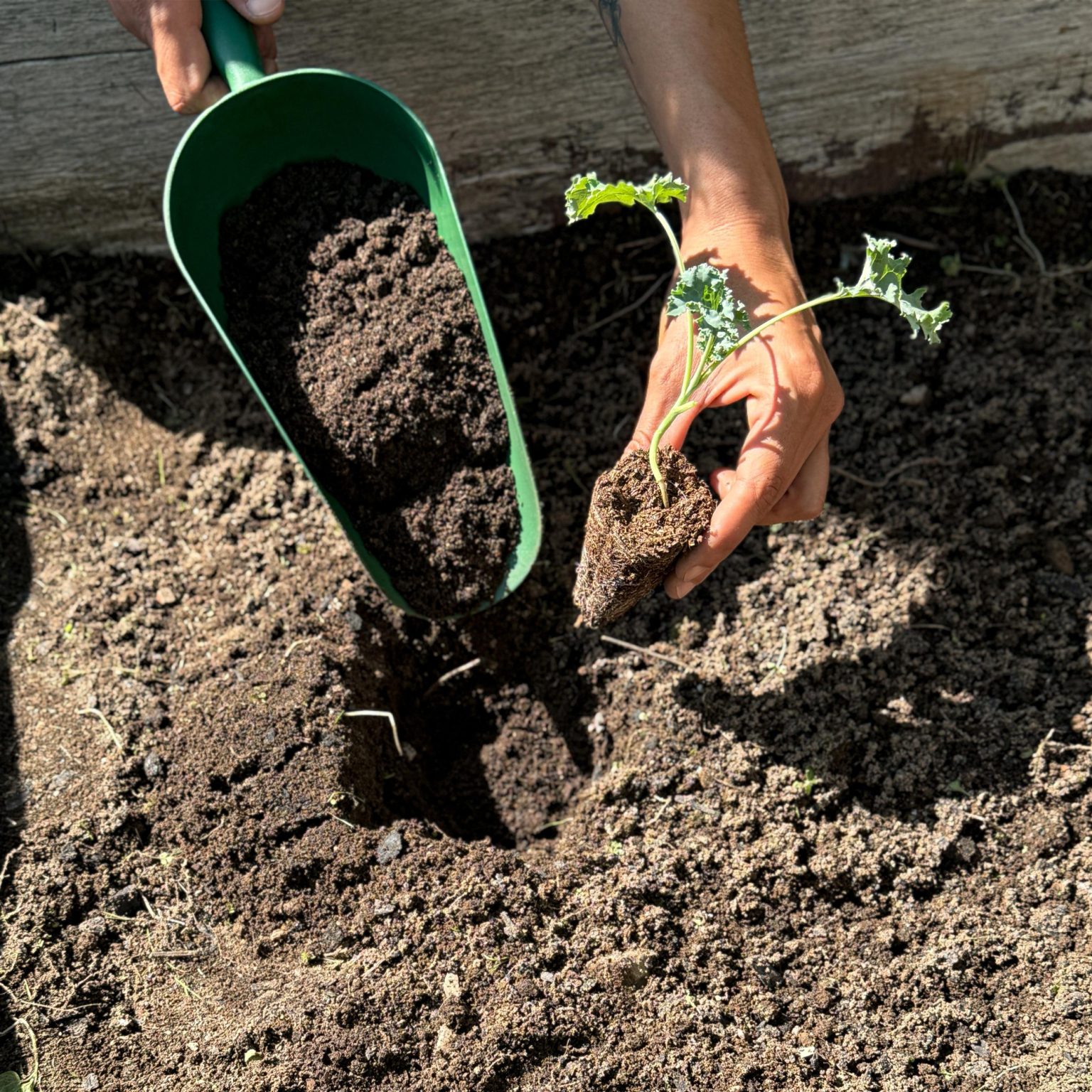
- Before planting: mix humus with the soil to improve the structure from the beginning.
- During cultivation: apply a superficial layer around the plants and stir lightly to integrate it.
You can repeat light applications during the growing season to keep the soil active throughout the cycle.
If you want to incorporate the benefits of worm humus into drip irrigation or foliar application, Cultivers liquid worm humus allows you to do it without complications, with the same ecological base in liquid format.
Available formats
- 3 L – For pots, houseplants or trying it for the first time in a small garden.
- 12 L – For an urban orchard, several fruit trees or a medium-sized garden with several seasons ahead.
- 20 L – The usual format for those who already use worm castings as a fixed part of their fertilizer program.
- 40 L – For large gardens or extensive orchards, with the best price per liter and reserve for the whole season.
If you prefer to work with liquid format to integrate it directly into the irrigation or to apply it foliar, we also have the liquid worm humus from Cultivers. Many customers use both: the solid as a base in the substrate, the liquid for maintenance applications.







Reviews
There are no reviews yet.